REPORT: Agile Leaders Confront the AI Skills Gap Learn more

Tariffs, Tech, and Turbulence:

How Geopolitics Are Rewiring Manufacturing Operations and Strategy
Download the full report today to learn how business leaders are navigating this unpredictable market.

Manufacturers are caught in the crossfire as international tensions and economic shocks rewrite the rules of business. From new tariffs and trade disputes between superpowers, to supply chain disruptions due to regional conflicts, organizations must adapt to economic volatility to stay ahead of the competition. To discover how manufacturers are handling the current geopolitical era, we commissioned a survey of industry business leaders that captures their priorities in the market.

85% of manufacturing organizations have adjusted their supply chain strategies in 2025.

From production and regulatory compliance costs to increased pressure on margins and timeline delays, these are just some of the factors that our respondents are considering when adjusting their business needs. 
Learn how business leaders are navigating this unpredictable market.
A simple blue curved arrow points downward and to the right on a light gray background, visually representing the AI skills gap.

The real business impact of geopolitical uncertainty 

Manufacturers have experienced increased production costs
Organizations have reduced reliance on suppliers in high-tariff regions

Leaders are prioritizing suppliers with advanced digital capabilitiesroving security
and data protection

Global supply chain instability, rising energy and raw material costs, and tariffs and trade restrictions are key geopolitical factors disrupting business operations at manufacturers. Business leaders are forced to make incredibly difficult decisions impacting operations, profit margins, and the longevity of their organization.

Simple white outline of a person icon on a dark blue hexagonal background with a light blue border, inspired by the PRO.FILE Manufacturing Report Fall 2025.

“With recent sanctions on certain countries, we’ve faced hurdles getting specialized parts through customs. It’s slowed down deliveries and forced us to work closely with our freight forwarders to navigate new regulations. To stay ahead, we’ve diversified some shipping lanes and even experimented with air freight despite the higher price.”

– Supply Chain VP at Industrial Manufacturer, United States.

The path forward for manufacturers 

Effective cost management will be critical for manufacturers to remain flexible and adapt to changing market conditions. Strategic decisions driven by tariffs and other geopolitical factors create ripple effects that complicate expense forecasts.  
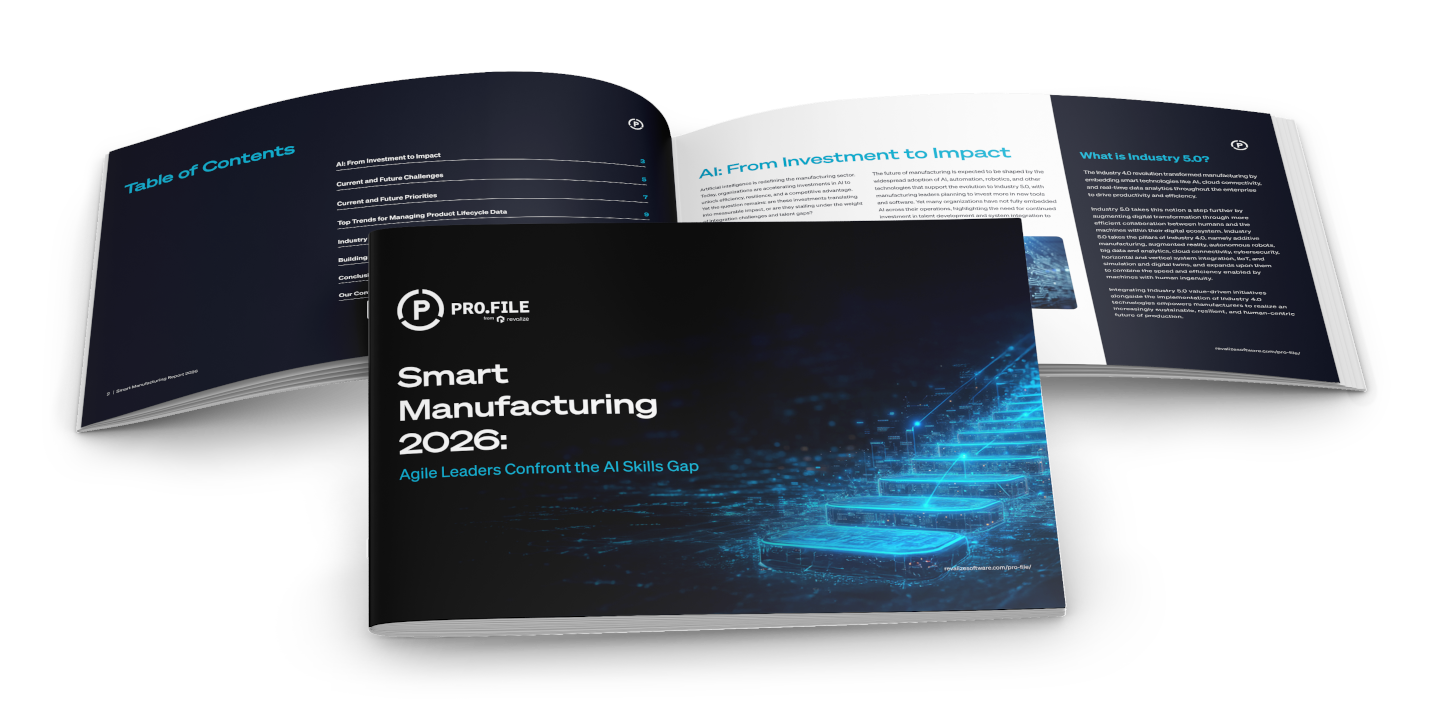
Two open booklets, the front displaying Smart Manufacturing 2026: Agile Leaders Confront the AI Skills Gap, with digital-themed blue graphics on the cover.
Smart Manufacturing Report Winter 2026
Get your copy of the Smart Manufacturing 2026 report to learn how manufacturing leaders are confronting the AI skills gap, integration complexities, and other operational challenges. Download today!